
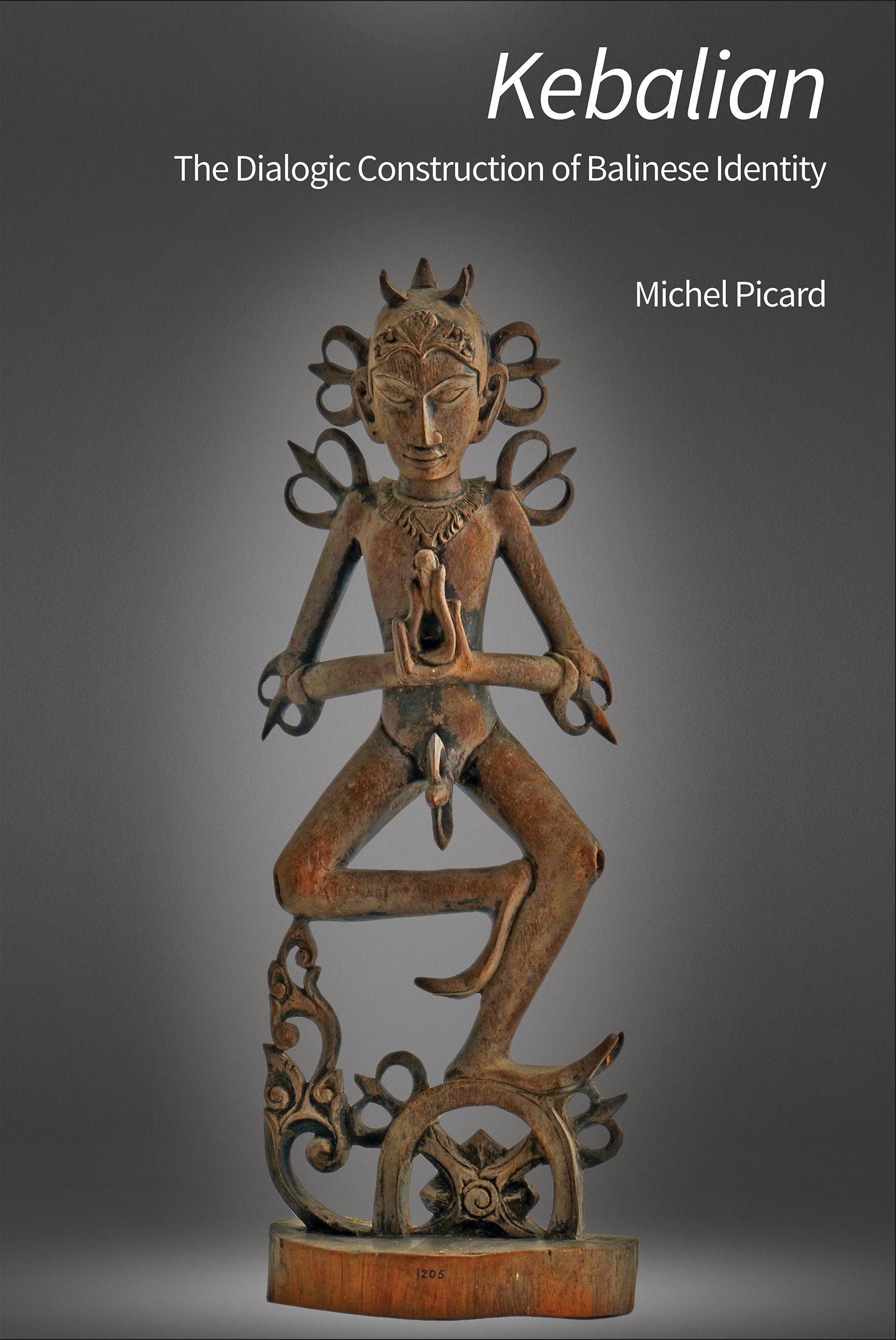
Kebalian: The Dialogic Construction of Balinese Identity
$42.00 SGD
Michel Picard
Short-listed for the Euroseas 2026 Humanities Book Prize
What is it to be Balinese? Over the past 100 years, the Balinese have been challenged by colonial occupation, political turbulence, and most recently tourism. In response, they have come to rely on the idea of Kebalian, or Balinese-ness. Kebalian is likened to a tree whose roots are religion (agama), the trunk tradition (adat), and the fruits, Balinese culture (budaya). How did the Balinese come to see their identity in these terms?
To understand how their sense of Balinese-ness came to be, Michel Picard makes a close reading of the dialogues the Balinese have engaged in both among themselves and with outsiders—Dutch orientalists and colonial administrators, Javanese nationalists, Muslim schoolteachers, Christian missionaries, Hindu gurus, artists and anthropologists, Indonesian government officials, tourists and tourism operators. He conducted over a hundred interviews with Balinese opinion leaders, officials and religious reformers.
A key through line in the construction of Kebalian is what Picard identifies as a twofold process of ‘religionization’ and ‘Hinduization’ that began with the first years of the incorporation of Bali into the Dutch East Indies, and became more urgent with Indonesia's independence. Kebalian today encompasses the tension between those Balinese eager to defend their own customary ritual practices and advocates of Hinduism as a world religion, who deny that such local traditions qualify as agama. The book presents a fascinating picture of religious change, identities in motion, and culture as it takes form. Scholars of religion, cultural change and Southeast Asian area studies will find this a fascinating and important volume.
Michel Picard, PhD, is a retired researcher at the French National Center for Scientific Research (CNRS) and a founding member of the Center for Southeast Asian Studies (CASE) in Paris.
Publication Year: 2024
472pp / 229 x 152mm
Paperback
ISBN: 978-981-325-242-4